The AI hype cycle is relentless. New tools, frameworks, and "game-changing" agents drop every week. Even Andrej Karpathy admits he's "never felt this much behind as a programmer." What's real? What's noise? How do you embrace agentic tools without drowning in slop or shipping code you don't understand?
That's why we're building daax.dev—secure agentic pair programming with a continuous feedback loop, fully customizable to your workflow.
The Problem
Developers are overwhelmed. The tools are powerful, but keeping up is exhausting. And when you do adopt an AI coding agent, new problems emerge:
- Context engineering, memory limits, model selection, token costs, data privacy—getting agents to work well is its own skill
- Over-eager agents make sweeping changes without asking
- Helpless agents stall without constant hand-holding
- Without good test loops and feedback mechanisms, the output is garbage
And security can't be an afterthought. Agents need sandboxed execution, proper identity, and auditable actions. Autonomy without guardrails is liability.
What We're Building
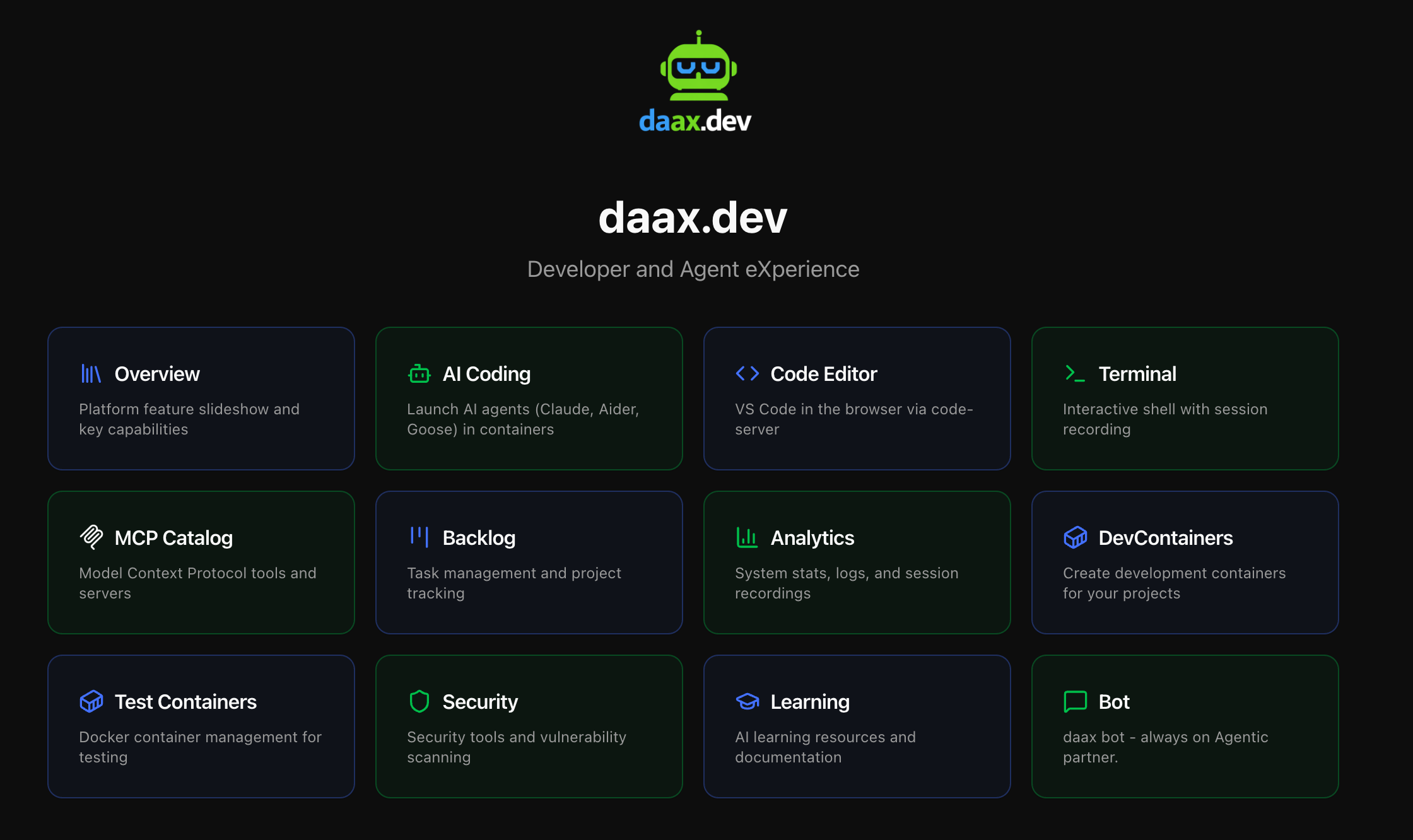
daax.dev is the platform where engineers and AI agents work together as equal partners—observable, auditable, and secure by default.
Secure by Design
Agents run in isolated sandboxes. No implicit trust—only the permissions explicitly granted. Capability-based access control, short-lived credentials, and automatic cleanup.
Continuous Feedback Loop
Every session is recorded. Humans and agents learn together—what worked, what didn't, what's next. Real-time monitoring with intervention capability when needed.
Your Workflow, Your Tools
Any AI agent. Any IDE. Any deployment. We use MCP, LSP, and open protocols. The platform adapts to you, not the other way around.
Not a replacement for your existing tools—it's the orchestration layer that connects them. Not an AI coding agent—it's where agents run with traceability and transparency, with the aim to improve.
Follow our progress on this blog, where we'll share technical deep dives, curated research, and updates on platform development.